One of the most petrifying driving experiences I had was on a highway in India, when a rapidly approaching dust cloud turned out to be a truck hurtling towards us on the wrong side of the highway. Dumbstruck, I gripped the seat in front of me, but our driver merely swerved to avoid the behemoth and continued blithely on his way.
“What was that?” I said, in a choked voice.
“Lorry, madam.”
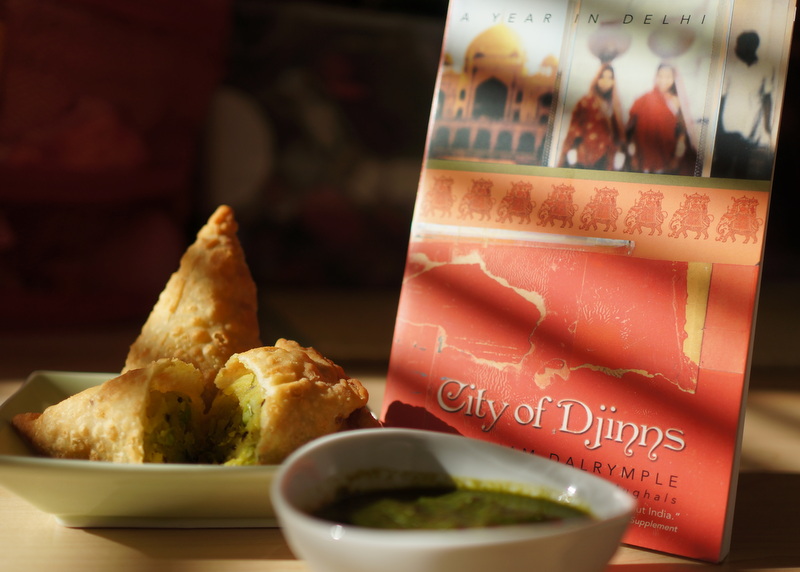
Malaysia has more than its share of horrendous drivers, but I had never encountered anything quite like this. Most traffic offences in Malaysia seem to be committed by the tiny Kancil cars, which wedge themselves into motorcycle parking spots and cut you off so sharply that you expect to see your car bleeding. But we had nothing so terrifyingly picturesque as that encounter in Rajasthan. The bright blue sky and dry mustard fields, worked by women in traditional clothes. The flash of the splendidly decorated lorry adorned with painted eyes (not that they seemed much use to it). My driver’s que sera sera attitude, where most Malaysians would be apoplectically reaching for their tire irons. I realize of course, that these were only tourist impressions, and that one would have to live a long time in India before attempting to understand its nuances. Fortunately, I was able to gain a little headway through William Dalrymple’s wonderful City of Djinns.
Now, my bookshelves are primarily groaning with fiction, but this is one of my favourite non-fiction books which has survived many purges. In fact, I ought to quantify this by saying that I originally stole it from my father’s library because I liked it so much and I was sure he wasn’t going to reread it as often as I would. William Dalrymple, a young Englishman who had already won rave reviews for his travel book In Xanadu, which retraced Marco Polo’s route across central Asia, then spent a year living and researching in the city of Delhi. The compulsively readable result is a history of Delhi’s colourful past and present.
Did you know, for example, that Delhi is said to have been built on the ruins of seven dead cities and is now in its eighth incarnation? Or that the Mughal emperors of India were actually descended from the Mongols, thus accounting for their almond-shaped eyes? The repeated rise and fall of this historic city, with its ferocious politics and tragic tales of emperors and slaves, is captured in this deceptively slim book.
I don’t know how William Dalrymple amassed all this knowledge; his research seems to have included not only scholarly sources, but lots of wandering around and chatting with people. Which leads me to believe that in person he must be extraordinarily charming. Or dogged, if he was able to insinuate himself into a house of eunuchs (yes, real eunuchs, and it’s a very sad story). He’s since gone on to write many other award-winning histories, the latest being Return of a King (FT Review), but this book, written when he was only 23, is a fascinating introduction to India.
 Snack Suggestions to Go With This Book:
- Samosas and mint sauce
- Hot chai tea – here’s a traditional from-scratch recipe
BOOK GIVEAWAY!!
I’m giving away two new (non-stolen) copies of City of Djinns to two lucky winners!
For a week, from Feb 4-11th 2013, if you do any of the following: like my Facebook page, share this link on Facebook, retweet or follow me on Twitter (or all four!), you’ll be entered into the random book drawing. If you’re retweeting or sharing on FB, please leave a comment on this page so that I’ll know to put your name down. Winners will be announced on Tuesday, Feb 12th, and can be anywhere in the world as long as there’s a way to post a book to you.
THIS GIVEAWAY HAS ENDED – Congratulations to winners Carolyn and Brandy, and thank you so much to everyone who participated!
What’s your favourite travel book?


Leave a comment